


With the exception of an occasional song or two in a Peloton workout, I’d never heard a Bad Bunny song until the Super Bowl halftime show, so like many other viewers, this was my introduction to him. While I didn’t get to sing along, I was equally invested in this show for a different reason.
What Bad Bunny presented at the halftime show was much more than a celebration of music and culture: he gave a master class in storytelling.
What Bad Bunny did for the Super Bowl halftime show is exactly what we do in strategic communications. He chose his narrative, identified his audience, and made decisions about his storytelling that would resonate with them and reach them in a specific way.
Here are just a few of the ways that he did that:
Using visual elements to create a scene.
Bad Bunny quite literally took us to Puerto Rico with his set. From the casita to the sugarcane to the jungle vibes, viewers got all of the elements of being transported to the island.
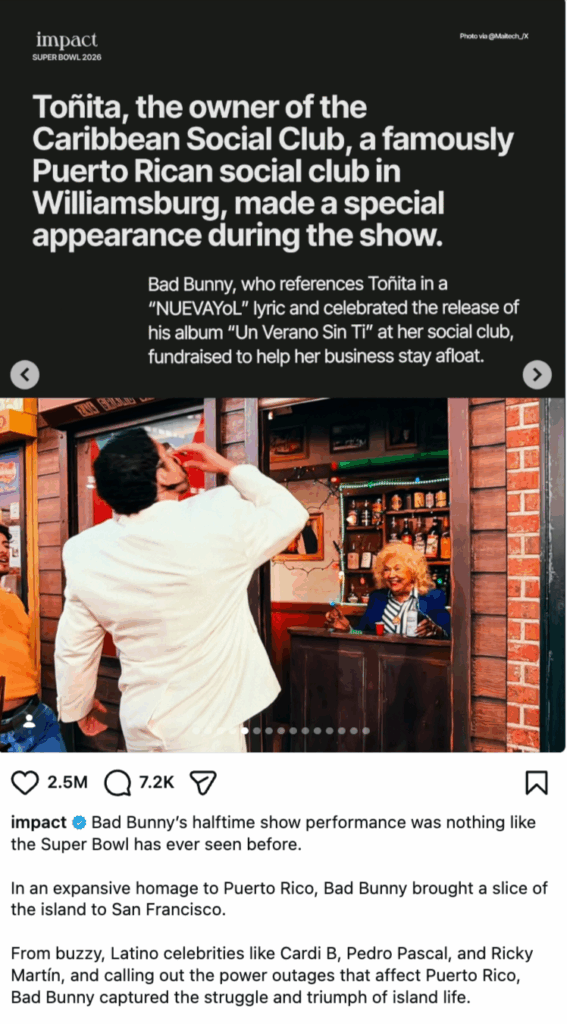
One of my favorite facts from the performance? All of the businesses and storefronts that were recreated in the set are actual, real-life businesses, including one of the last surviving Puerto Rican social clubs in New York City.
Invoking emotion and nostalgia.
My very favorite part was the moment that showed a little boy watching Bad Bunny’s Grammy acceptance speech in a (very 1990s) “living room” before Bad Bunny entered to hand him that Grammy, which he won just a week prior.
Did that little boy represent a younger version of Bad Bunny seeing his lifelong dream fulfilled?
Did he represent every Latino kid in America (and beyond) who deserves the chance to dream as big as they want?
Or did he represent both of those things — and more?
It was beautiful. Every single one of us was once a kid with a dream — Bad Bunny tapped into that emotion and the vulnerability of what makes us all human. A key element of storytelling is that people connect to people.
That scene was a visual representation of our collective desire for the next generation of kids to believe that they are smart, loved, and capable of anything, regardless of where they come from or what their skin color is.
Using symbols that are important to the audience.
As I was watching the performance, I could mostly tell which elements were symbolic, but because I’m as white as they come (99% Northwestern European, according to 23 and Me), I didn’t understand their meanings or context.
The pava hat and the powerlines? Of course, I got that right away. (How can we forget the paper-towel-throwing incident of 2017?)
But there was so much more symbolism that I missed — and the details are meticulous. The audience Bad Bunny was talking to knew exactly what those symbols were, and now, thanks to his performance, so does mainstream America. He included tiny details, including:
- Coco frio
- A piraguas cart
- Daddy Yankee’s Gasolina
- A wedding (maybe the most iconic symbol of unity to ever exist)
“The piragua stand signals community and can be found all over Puerto Rico. During Bad Bunny’s halftime performance, each glass bottle of piragua syrup on the cart featured a different flag, including Colombia, Spain, Puerto Rico, and Mexico.”
— Rolling Stone
Choosing language and words carefully.
I did not come to this conclusion on my own, but when I saw it in a post on Instagram, I was floored. OF COURSE. How did I not realize it?! Everything was in Spanish, except for two things:
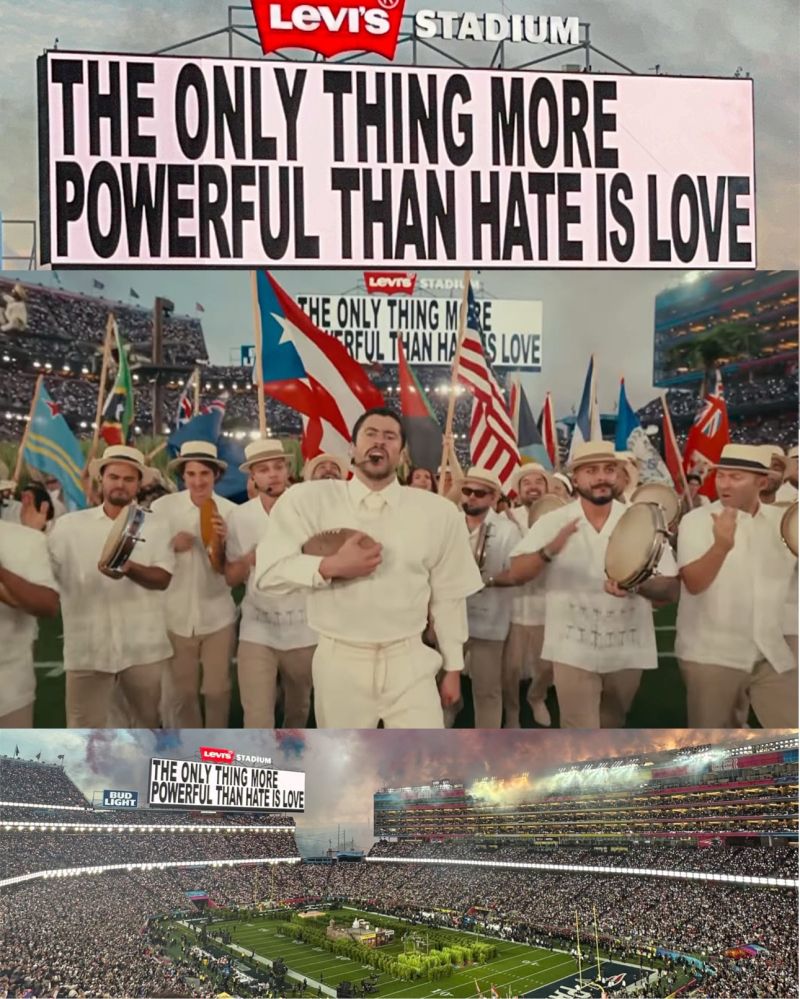
- The Only Thing Stronger Than Hate is Love
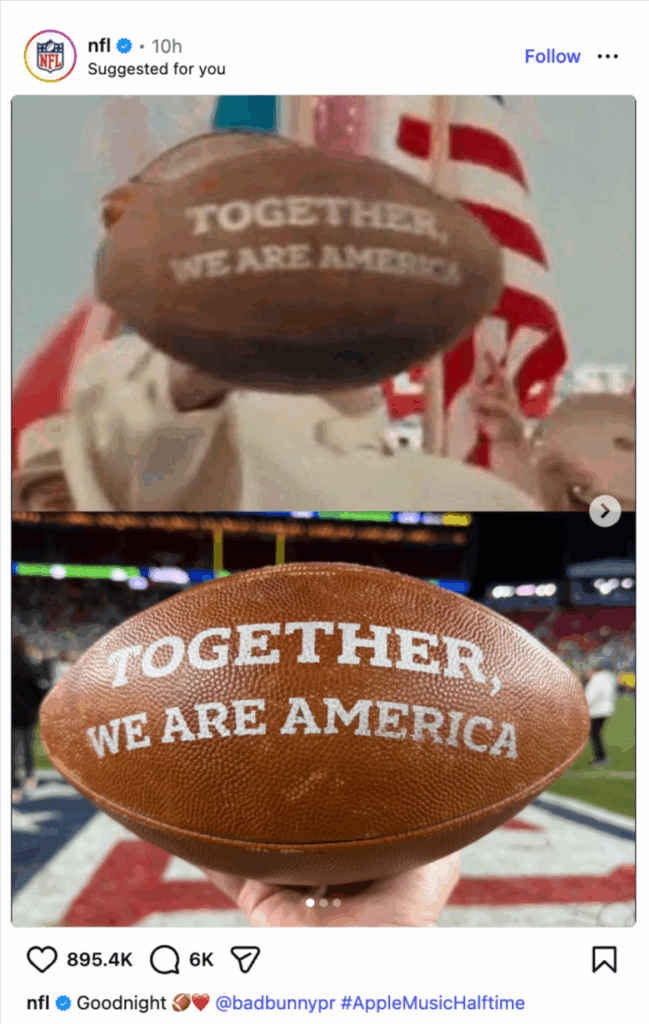
- Together, We Are America
Talk about STRATEGY. Bad Bunny’s performance made headlines because it was going to be in Spanish, and many people — including myself — didn’t understand a word of his songs. But he deliberately and specifically chose which words to translate for everyone to understand.
He spelled out his core message to ensure that it would reach anyone and everyone who turned on the halftime show. He literally could not make it any clearer.
Remaining consistent.
Do I wish Ricky Martin had burst into Livin’ La Vida Loca? I sure do. All of my other 30-something friends would have lost their minds. But that wasn’t the goal, and we weren’t the target audience. Bad Bunny set the tone and the goalpost very clearly: his halftime show was meant to be an ode to his culture, not pandering to a broad audience.
When you try to be all things to all people, you almost always fault. By not trying to appeal to the masses, he executed flawlessly.
In short, this halftime show was not meant for me. It was for the people who didn’t need the symbols explained to them. The people who understand his lyrics. Who speak his language: literally and metaphorically.
That’s the beauty of the United States: there are 350 million people here, and we all have different cultures and backgrounds.
So while I didn’t understand Bad Bunny’s lyrics, I was still fully invested in his show, thanks to his thought-out narrative, complete with meticulous details that were symbolic, emotional, and unifying. Because strategic storytelling transcends language.


Be the first to comment