


The “algorithm.” Whether you’re a content creator, a marketing director, or just someone who spends a little too much time online, you’ve definitely heard of it.
The algorithm can feel like a dark cloud hovering over everything we do online. We know that we’re constantly interacting with it, but what does it actually do? And maybe more importantly, how does it somehow know to fill my entire feed with videos of beagles!?
The algorithm can be overwhelming, frustrating, and honestly, a little intimidating. BUT: it can also be a really helpful tool, especially when it works in your favor. When you understand how it behaves, the algorithm becomes less of an invisible force and more of a tool.

How does the algorithm work?
Although platforms offer a bit of guidance, the algorithm itself remains largely a black box. Most of what we think we know doesn’t come from official explanations, but from watching what performs well, experimenting with content, and noticing patterns in how people interact online.
But let’s break it down in a way that actually makes sense.
In the most technical terms, the algorithm is a “set of rules and procedures used by social media platforms to sort, prioritize, and deliver content to users.” At its core, though, it’s much simpler. The algorithm watches how you behave online: what you click on, what you like, what you share, who you follow, and even how long you linger on a post. It uses all of that information to figure out what you’re interested in and then tailors your feed accordingly.
The ultimate goal? To keep you scrolling. Engagement is the buzzword right now, and for a reason. The longer you stay on the app, the more content, and more importantly, ads, the platform can show you, which directly fuels its revenue.
Tapping Into the Algorithm
As a general rule of thumb, only about 3% of a page’s followers will see any given post when it’s first published. So if you have 10,000 followers, your content may initially land in front of just 300 of them.
What happens next depends entirely on engagement. If those people like, comment, share, or save the post, the platform takes that as a signal that your content is worth showing again. The more engagement a post gets, the more likely it is to be pushed out to additional followers (and sometimes even beyond your existing audience).
This is where the algorithm becomes a classic snowball, and a bit of a chicken-and-egg situation.
Engagement leads to visibility, and visibility leads to more engagement. Good content accelerates that cycle; weak content slows it down. The tips below, some straight from Meta themselves, are all about nudging the algorithm in your favor so that snowball starts rolling sooner rather than later.
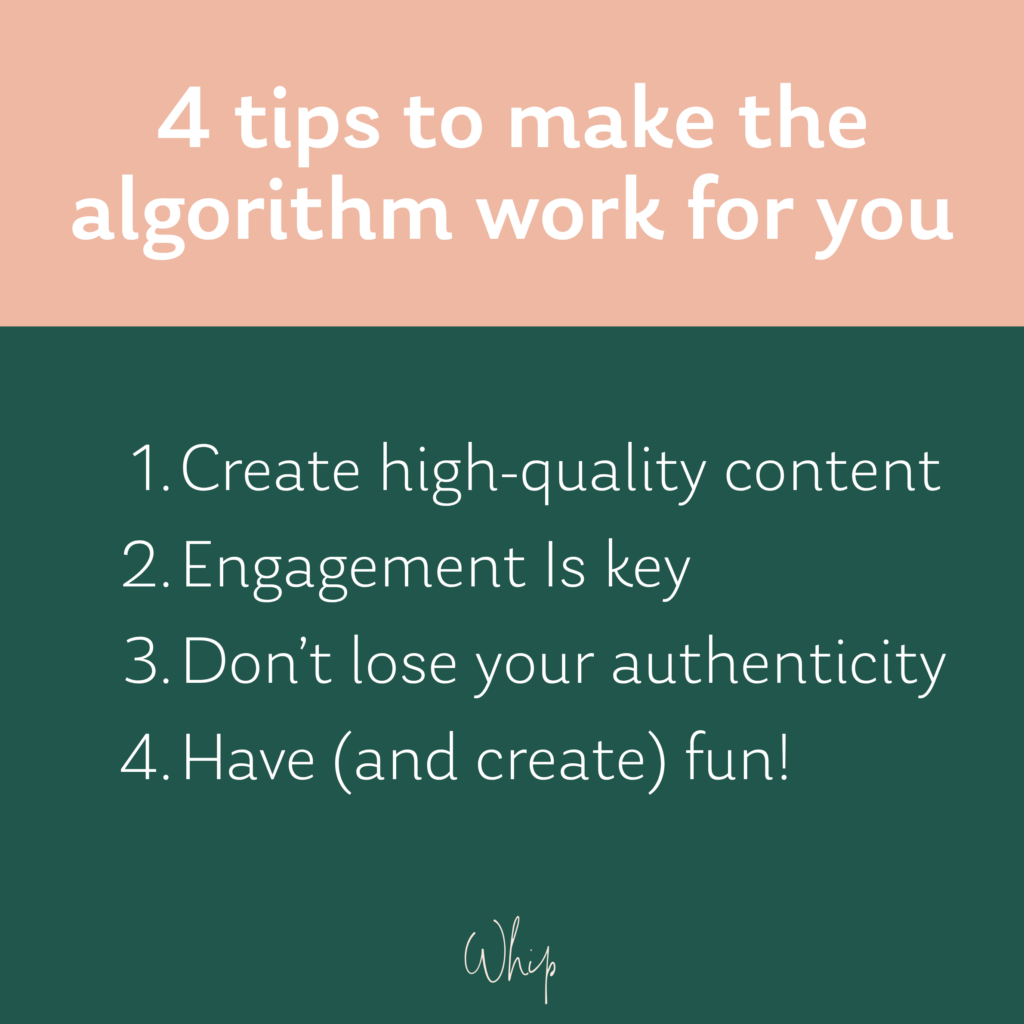
Create high-quality content: Quality matters. Strong visuals and clear audio (along with good lighting, high-resolution footage, and readable captions) make content easier to consume and more likely to hold attention. Pair that with engaging narratives that are helpful, inspiring, or entertaining, and you give people a reason to stop scrolling and share.
Engagement is key: Features like polls, questions, and user-generated content campaigns actively invite your audience to participate, which boosts interaction and reach. The more you let your audience respond, contribute, and react, the more they help do the work for you.
Don’t lose your authenticity: Originality goes a long way with the algorithm and with real people. Creating unique content that adds something meaningful helps your brand stand out. When your brand personality is clearly defined, you naturally attract a like-minded audience that’s more likely to engage consistently.
Have (and create) fun! People like joy. Happy or funny content is far more likely to be shared with a friend than something dark or heavy. When appropriate for your brand, being a little silly, playful, or lighthearted can go a long way in keeping your audience engaged, and coming back for more.


Be the first to comment